
How to Choose Professional TSCM and Bug Sweeping Services in Bangalore
Discover how to choose TSCM services in Bangalore. Compare bug sweeping scope, equipment, technical expertise, reporting, confidentiality, and inspection limitations.

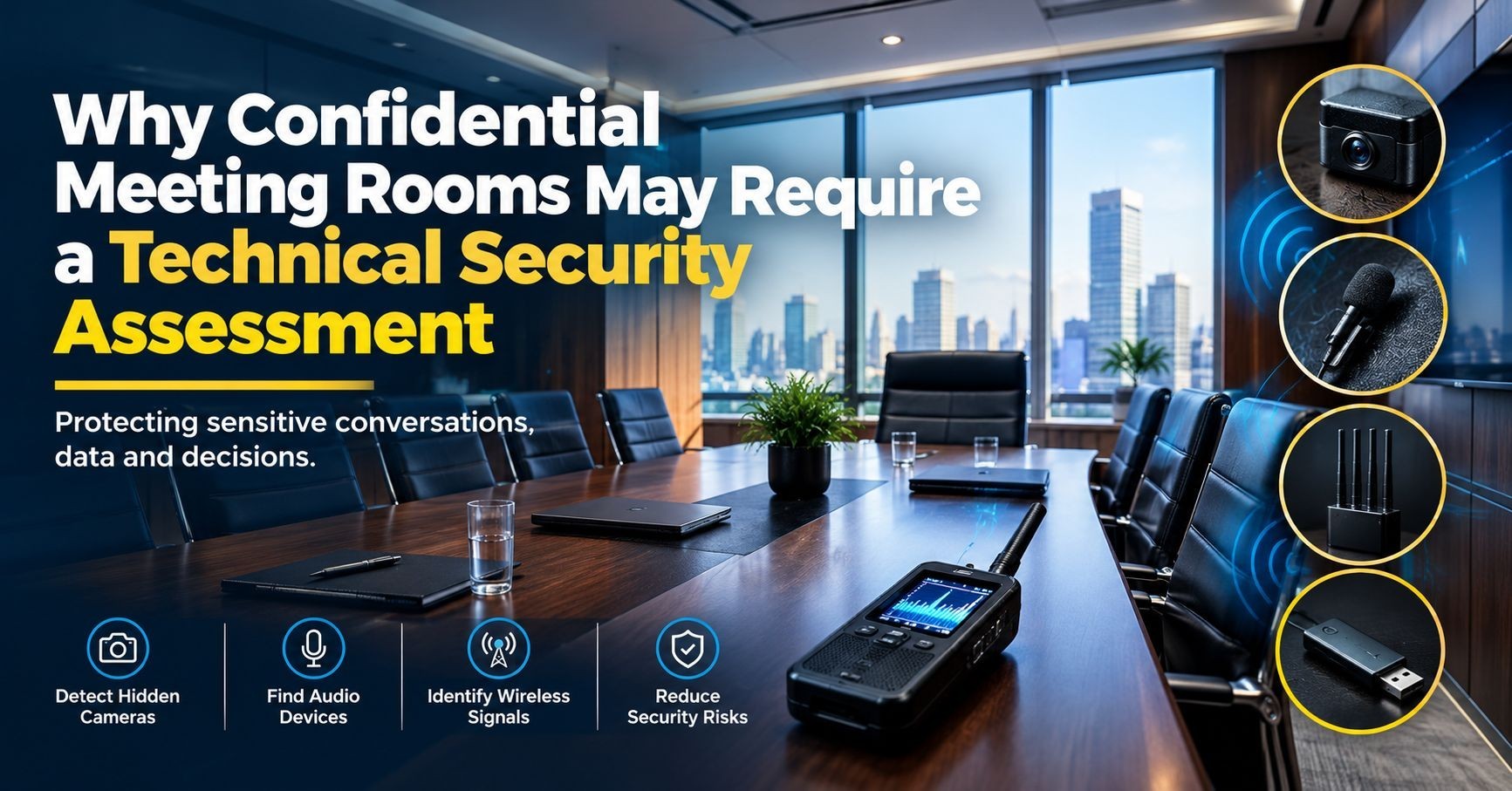
Bangalore’s thriving technology, startup, corporate, andresearch sectors regularly handle sensitive business information, intellectualproperty, strategic plans, and confidential discussions. Organisations and individuals concerned about potential unauthorized electronic surveillance can benefit from a professional Technical Surveillance Countermeasures (TSCM) inspection, which assesses relevant risks through a structured technical examination.
However, selecting the right provider involves more than just comparing prices or inquiring about the availability of advanced equipment. The inspection methodology, technical expertise, reporting standards, confidentiality practices, and clearly defined scope all influence the value of the service.
If you are considering TSCM and bug sweeping services in Bangalore, understanding these factors can help you choose a provider that meets your requirements and offers a realistic assessment of potential surveillance risks.
What Are TSCM and Bug Sweeping Services?
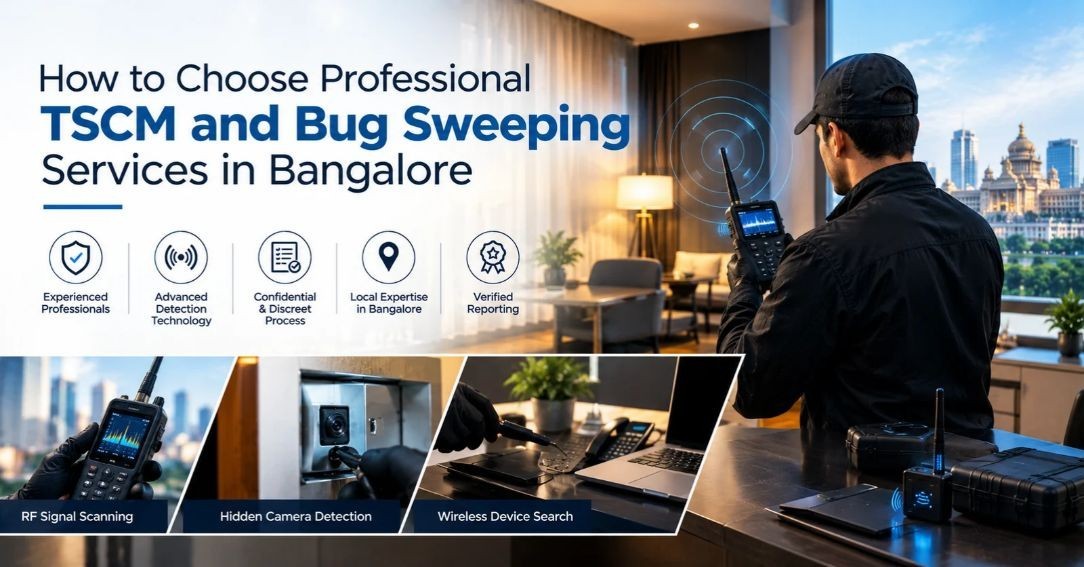
Technical Surveillance Countermeasures refers to a structured process used to assess potential electronic surveillance risks. Depending on the assignment, an inspection may involve physical examination, radio-frequency (RF) analysis, and other technical methods appropriate to the environment.
Bug sweeping is a commonly used term for inspections intended to identify potential hidden microphones, cameras, unauthorized transmitters, tracking devices, or other electronic surveillance indicators.
These services may be considered for:
- Corporate offices, boardrooms, and executive meeting rooms.
- Residential properties and private workspaces.
- Vehicles used for business or personal travel.
- Sensitive commercial negotiations and confidential meetings.
- Facilities handling proprietary information or research.
The appropriate inspection methods depend on the location, the suspected risk, the devices or technologies being assessed, and the agreedscope of work.
1. Check the Inspection Scope Before Hiring a Provider
One of the first questions to ask is precisely what the proposed inspection includes. A professional provider should explain the area to be assessed, the technical methods planned, and any limitations before the assignment begins.
For example, a corporate office inspection may focus onmeeting rooms, executive cabins, communication areas, and selected equipment. Vehicle inspection requires a different approach because of its construction, electronics, and accessibility.
Before confirming an appointment, ask:
- Which rooms, vehicles, or other areas will be inspected?
- Does the service include physical examination and relevant RF analysis?
- Are connected or wireless devices within the agreed scope?
- What access, preparation, or documentation is required?
- Which areas or technologies are excluded from the assessment?
A clearly defined scope helps avoid misunderstandings and makes it easier to evaluate the results.
2. Ask About Equipment and Technical Methods
TSCM inspections may use specialist equipment to examine different potential surveillance indicators. Depending on the assignment, such equipment can include RF spectrum analysis equipment, non-linear junction detectors (NLJDs), inspection tools, and other relevant instruments.
However, the presence of sophisticated equipment alone does not establish the quality of an inspection. The provider should be able to explain why particular tools are appropriate and how their results will be interpreted.
When comparing professional bug sweeping services inBangalore, ask whether the provider can explain:
- The purpose of the equipment used during the assessment.
- How RF signals are examined and interpreted.
- How legitimate wireless activity is distinguished from potentially unusual signals.
- Whether physical inspection complements electronic analysis.
- How technical observations are verified before being reported.
A competent inspection relies on a suitable combination of methods and informed technical interpretation, rather than on a single instrument's quick scan.
3. Evaluate Technical Expertise and Experience
TSCM work requires an understanding of electronic systems, radio-frequency environments, device behavior, and the limitations ofinspection techniques. Experience with one type of environment does notnecessarily mean a provider is equally equipped to assess every other setting.
For instance, an inspection of a technology office mayinvolve a dense wireless environment, while a residential property or vehicle presents different practical challenges.
Before engaging a provider, consider asking:
- What experience does the team have with similar inspection environments?
- Can the provider explain the planned process in straightforward language?
- How are unusual findings checked before conclusions are drawn?
- Does the team understand the impact of ordinary wireless devices and electronic interference?
- Can the provider describe the limitations of the proposed assessment?
Look for clear, technically grounded answers rather than unsupported claims about finding every possible surveillance device.
4. Understand the Reporting Process
An inspection is more useful when its findings aredocumented clearly. Before booking, establish what you will receive after the assessment and how any concerns will be communicated.
Depending on the agreed scope, a report may include:
- The areas and systems inspected.
- The general methods used during the assessment.
- Relevant observations and technical findings.
- Any limitations or inaccessible areas.
- Recommendations for further examination or corrective action, where appropriate.
Ask whether the provider distinguishes verified findingsfrom unexplained observations. An unusual signal or an unidentified electroniccomponent does not automatically establish that surveillance is taking place.
A clear report helps individuals and organizations understand what was examined, what was observed, and whether further action may be warranted.
5. Make Confidentiality a Priority
TSCM inspections can involve sensitive business information, private spaces, meeting schedules, and concerns about possible unauthorized monitoring. Confidentiality should therefore be discussed before the engagement begins.
Ask the provider how inspection details, photographs, technical records, contact information, and reports will be handled.
Important considerations include:
- Who will have access to the findings?
- How will reports and electronic records be stored and shared?
- Can the inspection be arranged with limited disruption?
- Are confidentiality terms available in writing?
- How long will records be retained, and how will they be disposed of?
For corporate assignments, it may also be useful toestablish an authorized point of contact and agree on access arrangements inadvance.
Professional conduct includes respecting property, followingapplicable laws, and handling sensitive information responsibly.
6. Compare Pricing Based on Scope, Not Just Cost
The cost of TSCM and bug sweeping services can vary according tothe size of the property, number of rooms or vehicles, complexity of the environment, equipment and techniques required, and time involved.
A low-cost inspection may not include the same scope, methods, or reporting as a more comprehensive assessment. Conversely, a higher price does not automatically prove that a provider is more capable.
Request a written quotation that explains:
- The areas and systems included.
- The expected duration of the inspection.
- The methods covered by the fee.
- Whether additional visits or specialist testing cost extra.
- The report or documentation included.
- Any exclusions or limitations.
Comparing quotations on a like-for-like basis makes iteasier to understand the actual service being offered.
7. Be Cautious of Unrealistic Guarantees
No responsible provider should promise that every hiddencamera, microphone, tracker, or surveillance method will always be detected.
Different technologies may require different examination methods. Some devices may be inactive during an inspection, may not continuously transmit radio signals, or may fall outside the agreed scope. Legitimate electronic equipment can also produce signals that require carefulinterpretation.
A TSCM inspection provides an assessment based on the methods, access, conditions, and scope available at the time. It cannot guarantee that a location is entirely free from surveillance risks.
Be cautious if a provider:
- Guarantees detection of every possible device.
- Claims one instrument can identify all surveillance technologies.
- Refuses to explain the inspection methodology.
- Makes dramatic claims without supporting technical details.
- Offers no meaningful description of reporting or limitations.
A transparent provider sets realistic expectations andexplains what the inspection can and cannot establish.
8. Consider the Requirements of Your Specific Environment
The most suitable inspection depends on why you arearranging it and which environment needs assessment.
Corporate offices and boardrooms
Businesses may consider TSCM inspections before sensitive negotiations, majorstrategic meetings, product launches, or discussions involving commerciallyvaluable information.
Residential properties
Homeowners and tenants may seek an assessment when they havespecific, reasonable concerns about unauthorized electronic monitoring. The scope should be agreed upon according to the property and the nature of the concern.
Vehicles
Vehicle-focused inspections may assess accessible areas forpotential tracking devices or other electronic surveillance indicators. Vehicle electronics, construction, and access can influence the methods used.
Technology and research facilities
Organisations handling proprietary designs, confidentialresearch, or sensitive commercial information may benefit from a risk-based assessment tailored to their operational environment.
Discussing your requirements beforehand helps the provider determine a suitable scope instead of offering an identical inspection package for every situation.
Why Consider Trace Point India for TSCMServices in Bangalore?
Selecting a TSCM provider is an important decision whenconfidential meetings, personal spaces, or sensitive business operationsrequire a closer technical assessment.
Trace Point India provides TSCM, debugging, and bug sweeping services for clientsseeking to assess potential electronic surveillance risks. The appropriate inspection scope and methods should be discussed in advance, taking into account the location, environment, and specific requirements.
Before proceeding, discuss the areas to be examined, the proposed technical approach, reporting expectations, confidentiality arrangements, and any limitations relevant to your assignment.
Frequently Asked Questions
What should I look for when choosing TSCM services inBangalore?
When choosing TSCM services in Bangalore, look for a clearly defined inspection scope, relevant technical expertise, appropriate equipment, transparent pricing, documented findings, confidentiality practices, and realistic explanations of service limitations.
How long does a professional bug sweeping inspection take?
The duration depends on the property or vehicle, its size and complexity, the inspection scope, and the methods required. Ask the provider for an estimate after discussing the assignment.
Can TSCM equipment detect every hidden camera ormicrophone?
No. Detection depends on the device technology, operating state, inspection conditions, equipment, access, and agreed scope. No singlemethod can guarantee detection of every possible surveillance device.
Is RF analysis sufficient for a complete TSCM inspection?
Not necessarily. RF analysis can help identify and assess radio-frequency activity, but non-transmitting devices and other potential indicators may require different examination methods. The approach should be selected based on the environment and the inspection objectives.
Should businesses arrange TSCM inspections regularly?
There is no universal schedule for every organization. Businesses can consider their risk exposure, sensitivity of information, changes to premises, operational requirements, and any specific concerns whendeciding whether an assessment is appropriate.
Arrange a Professional TSCM Assessment in Bangalore
When sensitive information and private discussions matter, choosing a technically capable and transparent inspection provider isessential. A clearly scoped TSCM assessment can help you better understand potential electronic surveillance risks and make informed decisions aboutappropriate next steps.
Discuss your inspection requirements with Trace Point India. Whether you need an assessment for a corporate office, boardroom, residence, or vehicle, be sure to ask about the scope, methods, reporting, and limitations before proceeding.












Facebook Conversations