
How to Import a JDM Sports Car From Japan to the USA: A Beginner's Guide
Learn how to import JDM sports cars to the USA, including 25-year import rules, shipping options, customs duties, costs, and registration.

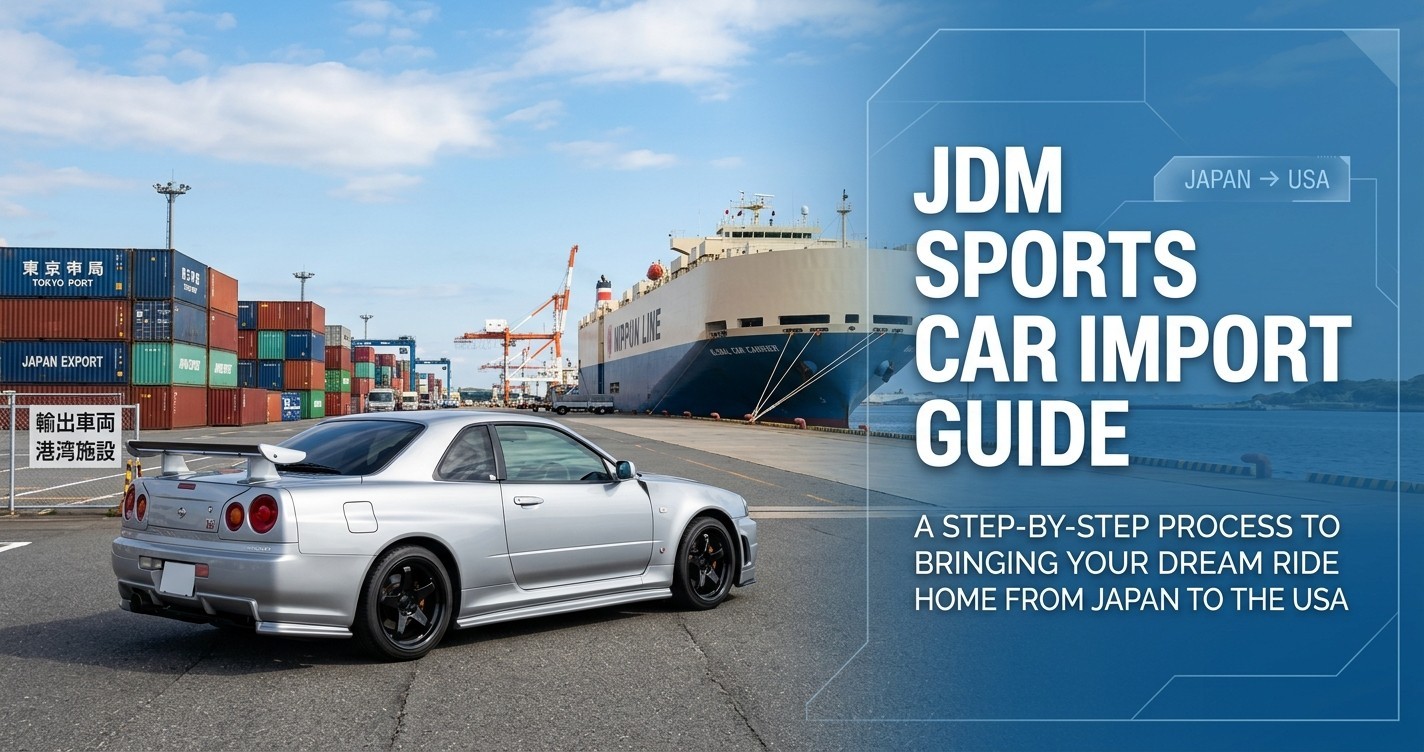
Importing a Japanese Domestic Market (JDM) sports car to the United States can be an exciting opportunity for enthusiasts who want a distinctive vehicle with a rich automotive heritage. From turbocharged performance coupes to lightweight rear-wheel-drive sports cars, Japan has produced numerous models that appeal to American collectors and driving enthusiasts. However, purchasing a desirable vehicle is only part of the process. Understanding federal import regulations, vehicle eligibility, shipping arrangements, customs requirements, and registration procedures is equally important.
For anyone planning to import JDM sports cars USA, careful preparation can prevent costly mistakes and help ensure the vehicle arrives legally and in suitable condition. This beginner's guide explains the essential steps, common expenses, and practical considerations involved in importing a sports car from Japan.
Why Import a JDM Sports Car From Japan?
Japanese sports cars have earned international recognition for their engineering, performance potential, distinctive styling, and motorsport heritage. Models such as the Nissan Skyline GT-R, Toyota Supra, Mazda RX-7, Honda NSX, and Nissan Silvia have developed strong followings among enthusiasts.
Depending on the model and production year, importing can provide access to specifications, trims, and factory configurations that were never officially sold in the United States. Buyers may also discover better-preserved examples or vehicles with documented Japanese auction histories.
Nevertheless, availability does not automatically mean a vehicle is eligible for US importation. Federal regulations must be checked before committing to a purchase.
Step 1: Check Whether the Car Is Eligible for US Import
The most important rule for beginners concerns the vehicle's age and compliance status. Under the federal 25-year exemption, a motor vehicle that is at least 25 years old, calculated from its date of manufacture, can generally be imported without meeting the Federal Motor Vehicle Safety Standards (FMVSS) applicable to newer vehicles. The vehicle must still satisfy applicable Environmental Protection Agency (EPA), customs, and other requirements.
For example, in 2026, vehicles manufactured in 2001 or earlier may qualify for the 25-year exemption, depending on their exact manufacturing date. A model year alone is not sufficient proof of eligibility.
Newer vehicles can sometimes be imported through specific compliance pathways, but these may require approval, modification, testing, or the involvement of a Registered Importer and an Independent Commercial Importer. Such routes can be expensive and are not suitable for every model.
Before purchasing, verify:
The exact date of manufacture and vehicle identity.
Whether the vehicle qualifies for the 25-year exemption.
Its emissions compliance or eligibility under an applicable EPA exemption.
Any applicable state-level emissions and registration requirements.
Whether the car has been modified in a way that affects eligibility.
Consult the National Highway Traffic Safety Administration (NHTSA), the EPA, and US Customs and Border Protection (CBP) before making a payment. A car that can be shipped from Japan is not necessarily a car that can be legally imported and registered in the United States.
Step 2: Choose the Right JDM Sports Car
Once eligibility has been established, consider which vehicle best suits your budget, driving preferences, and long-term plans.
Popular choices include the Nissan Skyline GT-R for its performance heritage, the Toyota Supra for its tuning potential, the Mazda RX-7 for its rotary engine, and the Nissan Silvia for its lightweight, rear-wheel-drive character. Availability, condition, pricing, and import eligibility vary by individual vehicle.
When comparing options, evaluate:
Mechanical condition: Check the engine, transmission, cooling system, suspension, brakes, and drivetrain.
Mileage and maintenance: Review service records and look for evidence of regular maintenance.
Accident history: Investigate structural repairs, corrosion, flood exposure, and previous damage.
Originality: Confirm whether the engine, bodywork, and other major components remain factory-standard or have been modified.
Parts availability: Research replacement components and specialist workshops in your area.
Resale prospects: Consider model rarity, documented history, originality, and market demand.
A well-maintained, less famous model can offer a more rewarding ownership experience than an iconic vehicle with neglected maintenance or extensive undocumented modifications.
Step 3: Find a Reliable Japanese Car Exporter
After selecting a suitable model, find a reputable Japanese car exporter or dealer with experience handling international shipments. Japanese vehicle auctions can offer a broad selection, but buying remotely requires additional diligence.
A trustworthy exporter should provide clear vehicle details, accurate photographs, an itemized quotation, and relevant documentation. If the car comes from an auction, request the original auction sheet and have it translated where necessary. Auction grades and inspection notes can provide useful information, but they should not be treated as a guarantee of mechanical condition.
Before placing an order, ask the exporter to confirm:
The vehicle identification and manufacturing details.
The purchase price and any auction or handling fees.
The condition report and available service history.
Export documentation and shipping arrangements.
The expected departure port and estimated transit time.
Payment terms, refund conditions, and responsibility for unexpected costs.
Avoid sellers who cannot establish ownership or provide credible documentation. Independent inspections are particularly valuable when purchasing an expensive or highly modified sports car.
Step 4: Calculate the Total Import Cost
The purchase price is only one component of the overall expense. To import a car from Japan successfully, buyers should calculate the expected landed cost before paying a deposit.
Typical expenses include:
Cost categoryWhat it covers
Vehicle purchaseAuction bid or seller's asking price
Export and handlingAuction fees, documentation, inland transport, and exporter charges
Ocean freightShipping from Japan to the United States
Marine insuranceOptional or contract-dependent protection during transit
Customs dutiesApplicable import duties and any other required charges
Port and customs brokeragePort handling, documentation, and customs clearance services
Inland transportDelivery from the US port to the destination
Compliance expensesApplicable emissions or safety-related work, where required
RegistrationState title, registration, inspection, and applicable taxes
The amount of customs duty depends on the vehicle's classification and applicable rules. Passenger cars have traditionally faced a 2.5% general US import duty, but additional tariffs or trade measures may apply depending on the date, origin, and classification. Sports cars classified as trucks or other vehicle types may be subject to different rates.
Therefore, do not rely on an outdated online calculator or assume every imported vehicle will face the same duty. Ask a licensed customs broker to confirm the current rate and calculate the applicable charges for the specific car.
Step 5: Arrange Shipping From Japan to the USA
Once the purchase and eligibility checks are complete, arrange international transportation. The two common shipping options are Roll-on/Roll-off (RoRo) and container shipping.
RoRo shipping involves driving or moving the vehicle onto a specialized vessel. It can be economical for vehicles that meet the carrier's acceptance requirements, although access to the vehicle during transit is limited.
Container shipping places the car inside a shipping container. It may offer additional protection and can be suitable for valuable vehicles, but it is often more expensive. Availability, loading arrangements, and insurance terms should be confirmed with the freight provider.
Before the vehicle leaves Japan, ensure the required export and shipping documents are prepared. These commonly include the Japanese export certificate or its accepted equivalent, bill of lading, commercial invoice or purchase documentation, and other records required by the relevant authorities.
The exporter and shipping company should explain the timeline, port procedures, insurance coverage, and responsibilities if the vessel is delayed.
Step 6: Complete US Customs and Federal Import Requirements
When the vehicle arrives in the United States, the importer must complete the applicable customs and federal procedures. This stage is particularly important because an incorrect declaration or missing document can cause delays, storage charges, or other complications.
Depending on the vehicle and its eligibility, documentation can include:
CBP entry documentation and supporting purchase records.
NHTSA Form HS-7, declaring the vehicle's safety compliance or applicable exemption.
EPA Form 3520-1, declaring the vehicle's emissions status or applicable exemption.
The bill of lading and required export documentation.
Evidence supporting the vehicle's age and identity, where relevant.
Requirements depend on the specific vehicle and import route. A vehicle qualifying for the 25-year NHTSA exemption must still meet applicable EPA requirements or qualify for a separate EPA exemption. Do not assume that one federal exemption automatically satisfies the other.
A licensed customs broker can help prepare the entry, classify the vehicle, calculate duties, and coordinate with the relevant authorities. However, hiring a broker does not replace the importer's responsibility to ensure the information submitted is accurate.
Step 7: Prepare the Car for State Registration
Federal import clearance does not automatically make a vehicle road-legal in every state. State requirements can differ significantly, especially for emissions testing, inspections, titles, and registration.
Before shipping the car, contact the relevant state motor vehicle agency and, where applicable, the state emissions authority. Confirm which documents are required to title and register a privately imported vehicle.
Keep copies of the purchase invoice, export certificate, bill of lading, customs release documents, federal import declarations, and any supporting age or compliance evidence.
Some states impose additional restrictions or inspection requirements on older imports and modified vehicles. A car that clears federal import procedures may still face state-level obstacles, so this step should never be left until the vehicle reaches the port.
Common Mistakes Beginners Should Avoid
First-time importers can reduce their financial and administrative risks by avoiding several common errors.
Buying before checking eligibility: Confirm the exact manufacturing date and relevant federal requirements before paying for the car.
Underestimating the total cost: Include freight, duties, brokerage, port charges, inland transport, and registration expenses in the budget.
Relying only on auction grades: Request supporting photographs, translated inspection notes, and an independent mechanical inspection when practical.
Ignoring modifications: Engine swaps, non-original components, and major structural changes may affect compliance, inspection, or registration.
Choosing an exporter solely on price: Compare documentation, communication, transparency, and experience rather than selecting the lowest quotation automatically.
Assuming federal clearance guarantees registration: Verify state requirements before committing to a particular vehicle.
Is Importing a JDM Sports Car Worth It?
Importing a JDM sports car can be worthwhile for enthusiasts seeking a specific model, rare factory specification, or piece of Japanese automotive history. The experience is most rewarding when the buyer researches eligibility early, verifies the vehicle's condition, and understands the complete financial commitment.
For beginners planning to import JDM sports cars USA, the safest approach is to treat compliance and budgeting as part of the buying decision, not as administrative tasks to handle afterward. Choosing an eligible vehicle, working with a reliable exporter, and preparing the required documents can make the import process considerably more manageable.
For additional information about model options and sourcing Japanese performance vehicles, explore importing Japanese sports cars to the USA. Compare available models carefully, verify each vehicle's eligibility independently, and make a purchase only after confirming the legal and financial requirements.














Facebook Conversations