
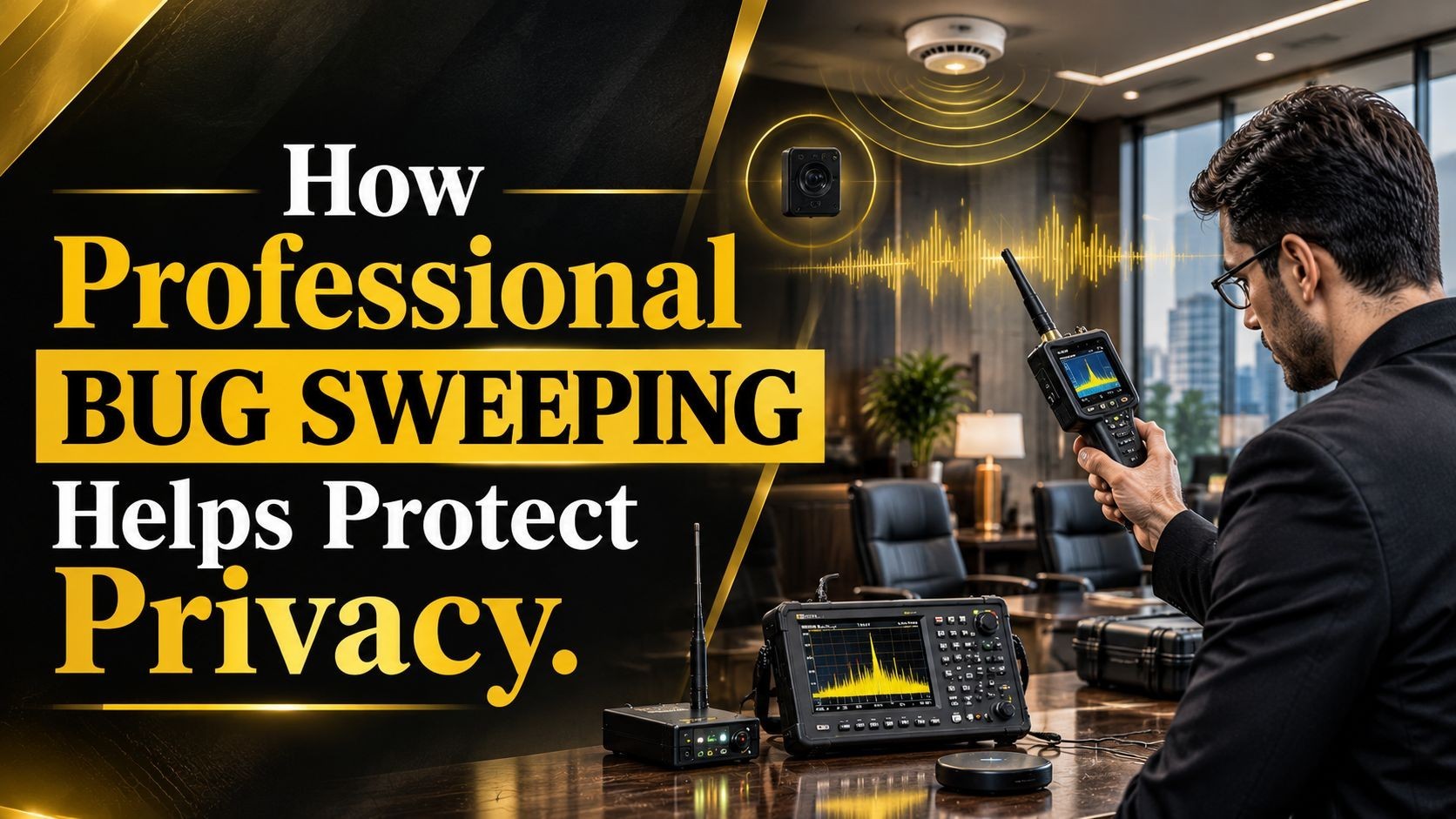
How Professional Bug Sweeping Helps Protect Privacy
Discover how professional bug sweeping and TSCM inspections help assess privacy concerns using specialized electronic detection equipment in Goa.

Inside Professional Bug Sweeping: Equipment, Methods, and Technical Expertise
Privacy is an important consideration for individuals, businesses, and organizations operating in today's increasingly connected environment. Offices, hotels, private residences, conference rooms, and commercial establishments often contain electronic equipment that supports communication, monitoring, and everyday operations.
While most installations serve legitimate purposes, concerns may occasionally arise about unfamiliar electronic components, unexplained equipment changes, or the possibility of information being monitored without appropriate authorization.
In such situations, assumptions and basic visual checks may not provide sufficient clarity. A professional technical assessment can help examine selected premises, evaluate relevant electronic installations, and investigate potential surveillance-related concerns.
Professional bug sweeping, commonly associated with Technical Surveillance Countermeasures (TSCM), involves systematic inspection procedures supported by specialized detection instruments. This article explains how these assessments work, what technologies may be used, and why professional evaluation matters when privacy concerns arise.
1. What Is Professional Bug Sweeping?
Professional bug sweeping is a technical inspection process used to examine selected environments for potential electronic surveillance equipment and relatedconcerns.
It may involve evaluating physical spaces, electronic installations, wireless activity, and unfamiliar components that require further investigation.
Unlike an ordinary visual check, a professional TSCM inspection uses a combination of technical methods and specialized instruments. The inspection approach depends on the premises, the concerns identified, and the scope of the assessment.
Common environments considered for inspection include:
- Corporate offices and executive cabins.
- Boardrooms and conference rooms.
- Private residences and villas.
- Hotels and hospitality establishments.
- Commercial premises.
- Vehicles and other sensitive spaces.
The objective is to assess the environment systematically and document relevant technical observations rather than draw conclusions from appearances alone.
2. Why Privacy Concerns Require Professional Evaluation
Privacy-related concerns can arise in different circumstances. An organization may notice unfamiliar equipment in a meeting room, while an individual may have questions about an unexplained electronic installation at home.
However, not every unusual object or electronic signal indicates surveillance.
Modern buildings contain numerous legitimate electronic systems, including wireless routers, sensors, access-control equipment, communication devices, and monitoring installations.
Professional evaluation helps distinguish routine electronic infrastructure from components or activities that may require further technical investigation.
A structured inspection can be particularly relevant when:
- Unfamiliar electronic equipment is discovered.
- Fixtures or installations have changed without a clear explanation.
- Sensitive meeting spaces require a technical assessment.
- Specific concerns arise about confidential information exposure.
- A property has undergone renovation or electrical modifications.
- An organization wants to review selected areas as part of its privacy practices.
The important distinction is that a technical inspection investigates concerns; it does not assume that surveillance is taking place.
3. How Specialized Equipment Supports Bug Sweeping
Professional bug detection involves more than simply searching for visible objects. Different detection instruments serve different purposes, and their selection depends on the technical requirements of the inspection.
Some commonly used technologies include:
RFSpectrum Analyzers
Radio-frequency (RF) spectrum analyzers help specialists examine radio-frequency activity within selected frequency ranges.
During a TSCM inspection, these instruments may help identify signals that appear unusual in the context of the surrounding electronic environment.
However, offices and residential properties naturally generate considerable wireless activity. Wi-Fi networks, mobile phones, Bluetooth devices, and nearby communication systems can all contribute to signal readings.
Consequently, an unusual signal requires technical interpretation and does not automatically establish the presence of a surveillance device.
Non-Linear Junction Detectors (NLJD)
Non-linear junction detectors are specialized instruments used to identify semiconductor-based electronic components, including components that may be present in electronic devices.
They can support the examination of selected physical areas where conventional visual inspection may not provide sufficient information.
Their use requires technical expertise, appropriate positioning, and careful interpretation of results.
Thermal Imaging Equipment
Thermal imaging instruments detect variations in surface temperature and can assist in examining selected areas for unusual thermal patterns.
Depending on the circumstances, thermal observations may help identify areas requiring closer examination.
However, heat patterns can have many ordinary explanations, including electrical equipment, lighting, ventilation systems, and environmental conditions.
Thermal imaging should therefore be considered one part of a broader inspection methodology rather than independent proof of electronic surveillance.
Physical Inspection Tools
Physical examination remains an important part of professional bug sweeping.
Inspectors may examine selected fixtures, electrical fittings, communication equipment, furniture, and other relevant installations for unfamiliar components or explained modifications.
Combining physical examination with specialized electronic detection methods provides a more structured approach to evaluating the premises.
4. Why Basic Visual Checks May Not Be Enough
A person may notice an unfamiliar object or unusual installation during a routine inspection. While this can be a useful observation, visual checks alone cannot evaluate every electronic concern.
Some components may resemble ordinary electronic fittings, while certain technical issues require specialized equipment and signal analysis.
Professional TSCM inspections differ from basic checks in several ways:
Basic visual check: professional TSCM inspection
Relies primarily on visible observations Combines physical and technical examination
May identify obvious irregularities Evaluates selected electronic and physical concerns
Does not normally include RF analysis May include specialized RF spectrum analysis
Limited technical interpretation Requires trained technical assessment
Informal observations can provide documented findings within the agreed scope.
A professional inspection does not guarantee that every possible device or vulnerability will be identified. Its value lies in applying suitable methods, interpreting observations, and clearly communicating findings and limitations.
5. Which Areas Should Be Considered for Inspection?
The scope of a bug-sweeping assessment should reflect how a property is used and where privacy concerns are most relevant.
Offices and Executive Cabins
Executive cabins may accommodate discussions involving financial matters, business strategy, confidential documents, and organizational decisions.
Selected electronic installations and relevant areas may be examined as part of a workplace privacy assessment.
Boardrooms and Conference Rooms
Boardrooms are frequently used for negotiations, management discussions, partnership meetings, and strategic planning.
Technical inspections may focus on communication equipment, electronic installations, and other relevant areas within these spaces.
Hotels and Private Villas
Hospitality properties contain different types of private and shared environments. Where specific concerns arise, a technical assessment may examine selected rooms and installations within the agreed inspection scope.
ResidentialProperties
Privately residents may also require technical assessments when individuals have specific concerns about unfamiliar electronic equipment or installations.
The inspection should be planned according to the property's layout, relevant observations, and the individual's requirements.
6. The Importance of a Systematic TSCM Inspection Process
Professional bug sweeping should follow a structured methodology rather than an unplanned search.
Although inspection procedures vary, a typical assessment may involve the following stages.
Initial Consultation
The process begins by understanding the client's concerns, the nature of the premises, and the areas requiring examination.
Site Assessment
The inspection team reviews the relevant environment and determines which areas and electronic installations should be included.
Physical Examination
Selected fixtures, equipment, electrical fittings, and other relevant locations may be examined for unfamiliar components or unexplained modifications.
Electronic Detection
Appropriate instruments may be used to evaluate radio-frequency activity and investigate specific technical concerns.
Technical Evaluation
Observations are interpreted in the context of the property's electronic environment. Findings that require additional investigation are assessed accordingly.
Reporting
Relevant observations, inspection scope, and recommendations may be documented to help the client understand the assessment outcome.
This process helps replace speculation with a more organized and technically informed evaluation.
7. Why Professional Expertise Matters in Electronic Detection
Detection equipment is only one part of a successful technical inspection. Understanding how to operate the instruments and interpret their results is equally important.
For example, an RF analyzer may display signals generated by legitimate communication systems. Without an understanding of frequency ranges, signal characteristics, and environmental interference, readings can easily bemisinterpreted.
Similarly,physical irregularities may have ordinary explanations related to maintenance,installation work, or equipment upgrades.
Professionalexpertise helps ensure that:
- Inspection methods are appropriate to the environment.
- Detection equipment is used correctly.
- Normal electronic activity is considered.
- Unusual findings receive appropriate evaluation.
- Conclusions are based on technical observations.
- Inspection limitations are communicated clearly.
Organisationsshould therefore consider the provider's technical experience, inspectionmethodology, equipment, confidentiality practices, and reporting standardsbefore selecting a TSCM service.
8.Bug Sweeping for Businesses in Goa
Goa'sbusiness environment includes hospitality establishments, resorts, privatevillas, commercial offices, and organisations that regularly handle sensitiveinformation.
Forbusinesses operating in these sectors, privacy assessments may be relevant inareas where confidential meetings, financial discussions, or sensitiveoperational activities take place.
Professional bug sweeping in Goa can help evaluate selected premises for potentialelectronic monitoring equipment through physical examination and specialisedtechnical detection methods.
Depending on the inspection requirements, an assessment may include RF spectrum analysis, NLJD examination, and other appropriate detection procedures.
Forhotels, resorts, offices, and private properties, the inspection scope shouldbe based on the specific environment rather than applying the same procedure toevery location.
Asystematic assessment can help property owners and organisations understandtheir electronic environment and investigate specific concerns throughprofessional evaluation.
9.How to Choose a Professional Bug Sweeping Provider
Selectinga suitable TSCM provider requires attention to more than equipment availabilityor service pricing.
Beforearranging an inspection, consider the following factors:
Technical Experience: Understand the provider's experience with different premisesand electronic environments.
Detection Equipment: Ask about the instruments used and how they relate to yourinspection requirements.
Inspection Methodology: Request details about the physical examination, electronicdetection procedures, and proposed inspection scope.
Confidentiality: Discuss how access to the premises and sensitive business or personalinformation will be handled.
Reporting:Understand whether the provider documents relevant findings and explains anylimitations.
Transparent Communication: A professional provider should explain what the inspectioncan assess without making unrealistic guarantees.
Theseconsiderations help individuals and organisations make informed decisions whenevaluating professional electronic detection services.
10. Professional TSCM and Bug Sweeping Services in Goa
Whenprivacy concerns involve electronic installations or potentialmonitoring-related equipment, a structured technical inspection can provide aclearer understanding of the environment.
We provides professional TSCM, bug sweeping, and electronic surveillance detection services for individuals and organisations.
Dependingon the premises and assessment requirements, technical inspections may involve:
- RF spectrum analysis.
- Non-linear junction detector examinations.
- Physical inspection of selected areas.
- Evaluation of relevant electronic installations.
- Specialised electronic detection procedures.
Theinspection approach is determined according to the environment and the scope ofwork.
Forbusinesses, hospitality establishments, and individuals in Goa, professional technical evaluation can help investigate specific concerns without relying onassumptions or unverified conclusions.
Explorethe available services to understand the inspection process and discuss therequirements of your premises.
Conclusion: Make Privacy Assessments aProfessional Priority
Privacyconcerns deserve careful and informed attention, particularly in environmentswhere confidential conversations, sensitive information, and electroniccommunication are part of everyday activities.
Professional bug sweeping provides a structured approach to examining selected premisesthrough physical inspections, specialised detection instruments, and technicalevaluation.
From RF spectrum analysis to NLJD examinations, each method serves a specific purpose within the wider TSCM inspection process. However, equipment readingsand unusual observations must always be interpreted carefully.
Whether assessing a corporate office, hotel, private villa, or residential property,professional evaluation can help individuals and organisations make moreinformed decisions about their electronic environment.
Don'trely on assumptions when evaluating electronic security concerns.
Exploreprofessional bug sweeping services with Trace Point India anddiscuss your TSCM inspection requirements.











Facebook Conversations