
How San Antonio Patients Can Track Progress on TRT
TRT therapy can affect people differently. Some patients notice changes in energy or mood within weeks, while others notice changes gradually over several months.

Starting hormone care is only the first step. The harder part is knowing whether it is actually working. Patients in San Antonio, TX often ask how to measure progress, what to write down, which lab results matter, and how long to wait before judging anything. The short answer is that progress is tracked through three things together: how you feel, what your lab results show, and how well your treatment plan fits your daily life.
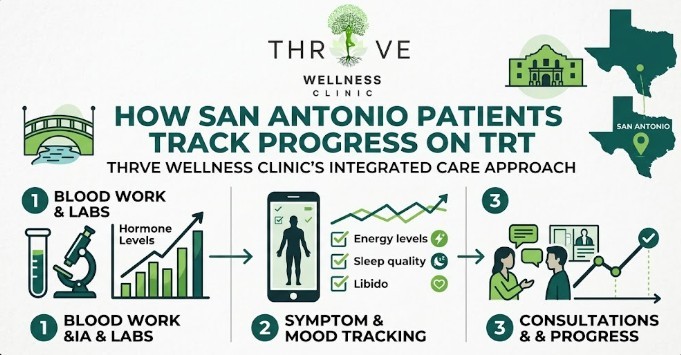
A good trt treatment plan is never a “set it and forget it” process. It combines symptom tracking, scheduled blood work, and regular conversations with a licensed provider who can adjust the plan as your body responds. This guide explains what to monitor, how often patients commonly check in, and how to keep records that make every follow-up visit more useful.
What Does Tracking Progress on TRT Actually Mean?
Tracking progress means comparing where you started with where you are now, using both personal observations and objective measurements. Your baseline, the symptoms and lab values you had before treatment began, is the reference point for everything that follows.
TRT therapy can affect people differently. Some patients notice changes in energy or mood within weeks, while others notice changes gradually over several months. Because responses vary, tracking removes guesswork and gives your provider real information to work with rather than memory alone.
Why Tracking Matters for Men Starting Treatment
TRT for men is typically prescribed after a provider reviews symptoms, medical history, and lab results. Once treatment begins, monitoring helps confirm that hormone levels are moving into an appropriate range and that the plan is being tolerated safely.
Tracking also protects you. Certain markers, such as red blood cell levels, can change during hormone therapy, and a provider needs scheduled lab work to catch changes early. Patients who track consistently tend to have more productive visits because they can describe patterns instead of vague impressions.
Signs You May Want to Discuss With Your Provider
Not every change is a sign of progress, and not every change is cause for alarm. Speak with a healthcare professional if you notice any of the following:
- Symptoms that are not improving or are getting worse
- New swelling, headaches, or shortness of breath
- Significant mood changes or trouble sleeping
- Questions about your dose, schedule, or side effects
Seek urgent medical care for chest pain, sudden weakness, or other emergency symptoms rather than waiting for a scheduled visit.
Step One: Record Your Baseline
Before or right at the start of treatment, write down how you feel in plain language. Rate each item on a simple 1 to 10 scale so you can compare later. Useful categories include:
- Energy levels throughout the day
- Mood and motivation
- Sleep quality
- Mental focus
- Workout recovery and strength
- Body weight and waist measurement
Keep this record somewhere easy to find, such as a notes app or a small notebook. A weekly check-in is usually enough, and it is far more reliable than trying to recall how you felt three months ago.
Step Two: Understand the Lab Work Behind Your Plan
Symptoms tell part of the story, but blood work shows what is happening inside your body. Providers commonly review markers such as total testosterone, free testosterone, estradiol, hematocrit, lipids, and PSA, depending on your age and health history. Your provider decides which markers are appropriate for you.
Many patients now use biomarker panels to get a broader view of their health than a single hormone number can provide. A wider panel may also include metabolic and inflammation markers, which can help a provider see how treatment fits into the bigger picture of your overall wellness.
How Often Should Labs Be Checked?
Follow-up timing depends on the individual and the provider’s protocol. Many patients have labs checked within the first few months after starting care and then at regular intervals once their plan is stable. Your provider will tell you what schedule makes sense, and it may change if your dose changes or new symptoms appear.
Making Lab Visits Easier in San Antonio
San Antonio is a large, spread-out city. Someone living in Stone Oak, near the Pearl, in Alamo Heights, in Southtown, or out toward Helotes can face very different drive times depending on traffic along I-10, Loop 1604, or US-281. For patients balancing work and family, frequent lab trips can become a reason to skip follow-ups.
This is where mobile phlebotomy can help. With a mobile service, a trained professional may collect your blood sample at home or at work, which can make it easier to stay on schedule without battling traffic. Availability and coverage areas vary, so it is worth asking the clinic what is offered for your address.
Step Three: Keep a Symptom and Side Effect Log
A log is the simplest tool you have. Each week, jot down changes you notice, along with the date of your injection, application, or dose if your plan involves them. Over time, patterns appear, such as energy dipping a few days before your next dose or sleep improving after a certain point.
Also note anything unwelcome. Acne, fluid retention, irritability, or changes in sleep should be reported rather than ignored. Providers can often adjust the dose, form, or timing, but only if they know what you are experiencing.
What Realistic Progress Can Look Like
Realistic expectations matter. Results are not guaranteed, and the timeline varies from person to person. Some patients report steadier energy, better focus, and improved exercise recovery over time, while others see smaller changes. Lifestyle factors such as sleep, nutrition, stress, and physical activity all influence how you feel alongside treatment.
If you are unsure whether you are improving, bring your log to your next appointment and ask directly. Your provider can compare it with your lab trends and tell you whether your progress looks on track.
How Telehealth Fits Into Follow-Up Care
Not every check-in has to happen in an exam room. Many follow-up conversations, such as reviewing lab results, discussing symptoms, and adjusting plans, can happen through telemedicine. Virtual visits save travel time, which is a real advantage across San Antonio, TX, where a trip across town can take a while at peak hours.
Telehealth works best when you come prepared. Have your symptom log open, know your most recent lab results, and write down your questions in advance. Some situations still call for an in-person visit, and your provider will let you know when that is the case.
Choosing Care for TRT in San Antonio
Patients searching for testosterone therapy San Antonio often compare clinics based on convenience, communication, and how thoroughly a clinic monitors patients after the first visit. Thryve Clinic is a healthcare provider offering hormone and metabolic health services, including TRT, to patients in San Antonio, TX, with options designed to make ongoing care more convenient.
When evaluating any provider, consider asking:
- How is my progress measured after treatment begins?
- Which lab markers will be monitored, and how often?
- Are virtual follow-ups or at-home lab collection available?
- Who do I contact if I have questions between visits?
Cost is also a practical factor. Reviewing clear pricing before you commit helps you plan for both the initial evaluation and long-term follow-up care, so there are no surprises later. Ask what is included in a membership or visit fee and what may be billed separately.
Common Mistakes to Avoid When Tracking Progress
A few habits can make tracking less useful. Avoid judging your results after only a week or two, since hormone changes often take time. Do not adjust your dose on your own or skip labs because you feel fine, because some markers can shift without noticeable symptoms. It also helps not to compare your timeline with someone else’s, since age, health history, lifestyle, and treatment type all play a role.
Finally, do not rely on a single data point. One tired day or one lab value rarely tells the whole story. Trends over several weeks or months give a much clearer picture of how your plan is working.
Conclusion
Tracking progress on hormone care comes down to consistency. Record a baseline, log your symptoms weekly, keep up with scheduled blood work, and use virtual visits and at-home lab collection when they make follow-ups easier. Together, these habits give your provider the information needed to fine-tune your plan safely.
If you are exploring care about of TRT in San Antonio, TX, consider scheduling an evaluation with a qualified provider who can explain how your progress will be monitored from the start. Individual decisions about treatment should always be made with a licensed healthcare professional who knows your full medical history.
FAQ
How long does it take to see progress on TRT?
It varies. Some patients notice changes within a few weeks, while others take several months. Your provider will usually review symptoms and labs over time rather than relying on a single early result.
What should I track while on TRT?
Many patients track energy, mood, sleep, focus, workout recovery, and body measurements, along with any side effects. Lab results reviewed by your provider add the objective side of the picture.
How often are blood tests needed during treatment?
Timing depends on your provider’s protocol and your individual health. Labs are commonly checked a few months after starting and then at regular intervals, but your provider will set the schedule that fits you.
Can I handle follow-up visits virtually?
Often, yes. Many check-ins, including reviewing results and discussing symptoms, can be done through telehealth, though some situations may require an in-person visit.
Is TRT right for everyone?
No. Treatment depends on symptoms, medical history, and lab findings, and it is not appropriate for every patient. A qualified healthcare professional can evaluate whether it may be a good option for you.













Facebook Conversations