
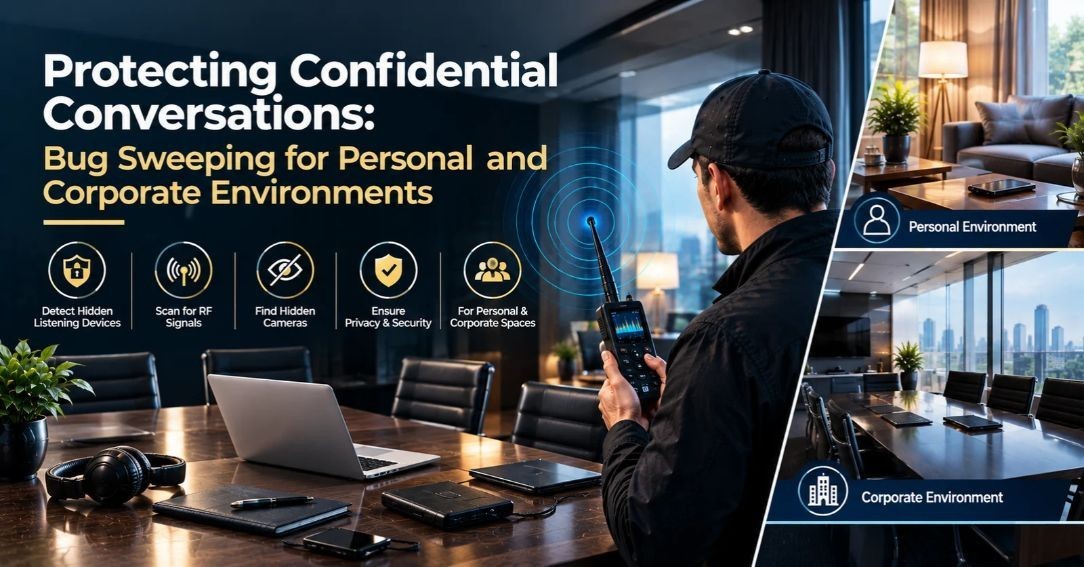
Protecting Confidential Conversations: Bug Sweeping for Personal and Corporate Environments
Discover how professional bug sweeping and TSCM services help individuals and businesses assess electronic surveillance risks and safeguard confidential conversations. Explore privacy-focused inspection options with Trace Point India today.

A confidential conversation can involve anything from personal matters discussed at home to sensitive negotiations taking place in a corporate boardroom. When private information is shared, the possibility of unauthorized access can raise concerns about personal privacy, commercial interests, and professional relationships. In an increasingly connected world, understanding the potential risks of electronic surveillance is an important part of maintaining responsible privacy practices.
Professional bug sweeping and technical surveillance countermeasures (TSCM) inspections can help individuals and organizations assess their specific concerns about electronic surveillance in sensitive environments. By combining appropriate technical inspection methods with practical privacy measures, individuals and organizations can make more informed decisions about protecting confidential discussions.
Why Confidential Conversation PrivacyMatters
Privacy is important wherever sensitive information isexchanged. Individuals may discuss personal matters, financial arrangements, orfamily concerns in their homes, while businesses regularly share commerciallysensitive information during meetings, negotiations, and internal planningsessions.
Unauthorized disclosure of such information could lead to personal distress, reputational damage, commercial disadvantages, or loss of confidence among clients and business partners. Although not every unusual incident indicates surveillance, credible concerns may warrant a measured review of the circumstances and, where appropriate, a professional technical assessment.
Maintaining confidential conversation privacy involves more than keeping documents secure. It also requires awareness of the surrounding environment, control over access to sensitive spaces, and suitable procedures for managing electronic devices.
What Is Professional Bug Sweeping?
Professional bug sweeping refers to technical inspections that assess potential electronic surveillance risks within a particular environment. These services may form part of a broader TSCM assessment, depending on the client's concerns, the location, and the inspectionrequirements.
Specialists may use appropriate equipment and inspection methods to examine relevant areas for signs of unauthorised electronic monitoring. The scope can vary according to the environment and the type ofconcern being investigated.
Professional bug sweeping does not mean that surveillance is necessarily taking place. Instead, it provides a structured way to investigate specific concerns and evaluate potential risks using appropriate technical methods.
Personal Bug Sweeping: Assessing Privacy at Home
Homes are places where individuals expect a reasonable degree of privacy. In residential environments, people often share personal conversations, financial discussions, family matters, and other sensitive information.
When credible concerns arise about possible electronic monitoring, personal bug sweeping can help assess the situation through a structured technical inspection.
Situations Where a Residential Inspection May BeConsidered
A professional assessment may be appropriate when:
- There are specific, credible concerns about possible unauthorized electronic monitoring.
- An unexplained access incident raises questions about the integrity of a private space.
- A property has undergone unauthorized alterations that warrant further examination.
- An individual requires a technical privacy assessment following a relevant incident.
- A risk assessment identifies a need for additional checks in sensitive areas.
These circumstances do not establish that a surveillance device is present. A responsible approach begins with examining the available information and determining whether a professional assessment is warranted.
What May a Personal Bug-Sweeping Inspection Involve?
Depending on the circumstances, an inspection may include a physical examination of relevant areas, checks of accessible electronic equipment, and technical analysis using appropriate detection tools. The scopeshould be established in advance, with clear explanations of the methods used and their limitations.
Individuals should also choose providers that respectproperty rights, maintain confidentiality, and conduct inspections withappropriate authorisation.
Corporate Bug Sweeping: Supporting BusinessConfidentiality
For businesses, confidential conversations can influencenegotiations, investment decisions, strategic planning, intellectual propertymanagement, and client relationships. Protecting the confidentiality of thesediscussions is therefore an important consideration in corporate riskmanagement.
Corporate bug sweeping can help organisations assesspotential electronic surveillance risks in selected business environments, including:
- Boardrooms and conference rooms
- Executive offices and private meeting spaces
- Rooms used for commercial negotiations
- Offices handling sensitive financial or legal information
- Research and development areas containing valuable intellectual property
- Other locations where confidential discussions regularly take place
A properly scoped corporate TSCM inspection can helpevaluate identified concerns and provide technical findings that inform furtherdecisions. Businesses should select an inspection scope that reflects theiroperational needs rather than assuming every workspace requires the same level of assessment.
Why Boardrooms and Executive Offices Deserve Attention
Boardrooms and executive offices may be used to discussacquisitions, financial forecasts, commercial agreements, internal strategy, and other sensitive matters. Organisations can consider targeted technicalassessments where the information involved, the environment, or specificcircumstances justify additional scrutiny.
A professional inspection should explain what was examined, which methods were used, and what conclusions can reasonably be drawn from the findings. This helps decision-makers understand both the value and the limitations of the assessment.
How Electronic Surveillance Detection Works
Electronic surveillance detection involves evaluatingpotential surveillance risks through suitable technical and physical inspection methods. The techniques used depend on the environment, the suspectedtechnology, and the objectives of the assessment.
1. Radio-Frequency Analysis
Radio-frequency (RF) analysis can help specialists examinesignals within a defined area and investigate activity that warrants furtherattention. However, everyday electronics—including wireless routers, mobilephones, Bluetooth devices, and other legitimate equipment—also generate radio-frequency activity. Signal interpretation requires technical knowledge and consideration of the environment.
2. Physical Examination
A physical inspection may involve examining accessible areas, fixtures, and relevant electronic equipment for indications of unauthorized or suspicious devices. The scope and depth of the examination depend on the location and identified concerns.
3. Specialized Technical Equipment
Depending on the requirements, specialists may useappropriate detection and inspection equipment to investigate potentialelectronic surveillance risks. No single instrument can identify every possibledevice or method, so the choice of equipment should be based on the assessmentobjectives.
4. Findings and Recommendations
A professional assessment should provide a clear explanation of its scope, observations, limitations, and recommended next steps. This allows individuals and organisations to understand the findings withouttreating every unusual signal or unexplained event as proof of surveillance.
Practical Ways to Strengthen Privacy Beyond Bug Sweeping
Technical inspections can be valuable when justified, but they are only one part of a broader privacy strategy. Everyday practices canalso help reduce the unnecessary exposure of confidential information.
Control Access to Sensitive Spaces
Limit access to private meeting rooms, executive offices, and other designated areas. Establish visitor procedures and review accesspermissions when staff roles or operational requirements change.
Manage Electronic Devices Responsibly
Use authorized devices and keep conferencing equipment, connected systems, and workplace technology under appropriate management. Follow organizational rules for recording, photography, and personal devices during sensitive discussions.
Handle Confidential Information Carefully
Avoid leaving documents, presentations, or unlocked devicesunattended. Share sensitive information only with authorized recipients and useappropriate channels for confidential communications.
Review Workplace Procedures
Businesses should establish clear confidentiality policies and provide employees with guidance on handling sensitive information. Individuals can similarly review access arrangements and device practices intheir homes.
Seek Professional Advice When Appropriate
When specific circumstances justify further investigation, consult a qualified provider that explains its methods, scope, and limitationsclearly. Avoid making conclusions based solely on speculation, online detection claims, or unexplained electronic activity.
Choosing the Right TSCM and Bug-Sweeping Provider
Selecting a provider requires careful consideration, whetherthe inspection concerns a residence, office, or corporate meeting space.
Before proceeding, consider the following factors:
- Technical expertise: Search for relevant experience in TSCM inspections and electronic surveillance detection.
- Clearly defined scope: Confirm which areas and potential risks will be assessed.
- Appropriate equipment: Ask how the inspection methods will be selected for the environment.
- Confidentiality practices: Understand how sensitive client information and inspection findings will be handled.
- Transparent reporting: Seek clear explanations of observations, limitations, and recommended next steps.
- Realistic expectations: Be cautious of providers that promise guaranteed detection or make unsupported claims about surveillance.
A professional provider should help clients understand what an inspection can establish and where additional investigation may be necessary.
Frequently Asked Questions
What is the purpose of professional bug sweeping?
Professional bug sweeping aims to assess potential electronic surveillance risks using appropriate inspection methods and technical equipment. The scope of professional bug sweeping varies based on the location, specific concerns, and assessment objectives.
Is personal bug sweeping different from corporate bugsweeping?
The underlying technical principles may overlap, but the inspection scope and priorities can differ. Residential assessments focus on relevant personal privacy concerns, while corporate inspections may address boardrooms, executive offices, commercial negotiations, and sensitive business information.
Can electronic surveillance detection identify every hidden device?
No inspection can guarantee that every possible surveillance device or method will be detected. Results depend on the equipment, environment, inspection scope, and techniques used.
Should businesses arrange regular TSCM inspections?
There is no universal schedule suitable for every organization. Inspection frequency should reflect the sensitivity of business operations, the identified risks, changes to the workplace, and any specific concerns that arise.
Take a Proactive Approach to Confidential Communication
Are you looking to assess potential electronics surveillance risks in a personal or corporate environment? Make an informed decision about your privacy requirements by exploring professional TSCM and bug-sweeping assessments offered by Trace Point India.
A clearly defined technical inspection can help you betterunderstand identified concerns, evaluate the findings, and consider appropriate next steps for your environment.
Professional TSCM and Bug-Sweeping Services by TracePoint India
Protecting confidential conversations requires a careful blend of technical awareness, appropriate access controls, and responsible privacy practices. Whether the concern relates to a private residence, an executive office, or a corporate meeting room, the first step is to understand the circumstances and determine whether a specialized assessment is needed.
Trace Point India provides professional TSCM inspections, bug sweeping, and electronic surveillance detection services for individuals and organisations seeking to assess potential technical privacy risks. The inspection requirements can be discussed according to the environment, specificconcerns, and intended scope of work.
How can I determine whether a professional assessment is appropriate?
Begin by documenting the specific concern and reviewing relevant circumstances. If the concern warrants technical evaluation, consult a qualified provider that can explain the proposed inspection, its limitations, and the expected reporting process.













Facebook Conversations